About the Project
Since childhood, the concept of "stability" was absent from my vocabulary. I grew up as a cosmopolitan soul, bound not to a single geographic location, but to the memories and emotions each place left within me. As an unsettled immigrant and a Third Culture Kid (TCK), constant movement shaped my identity.
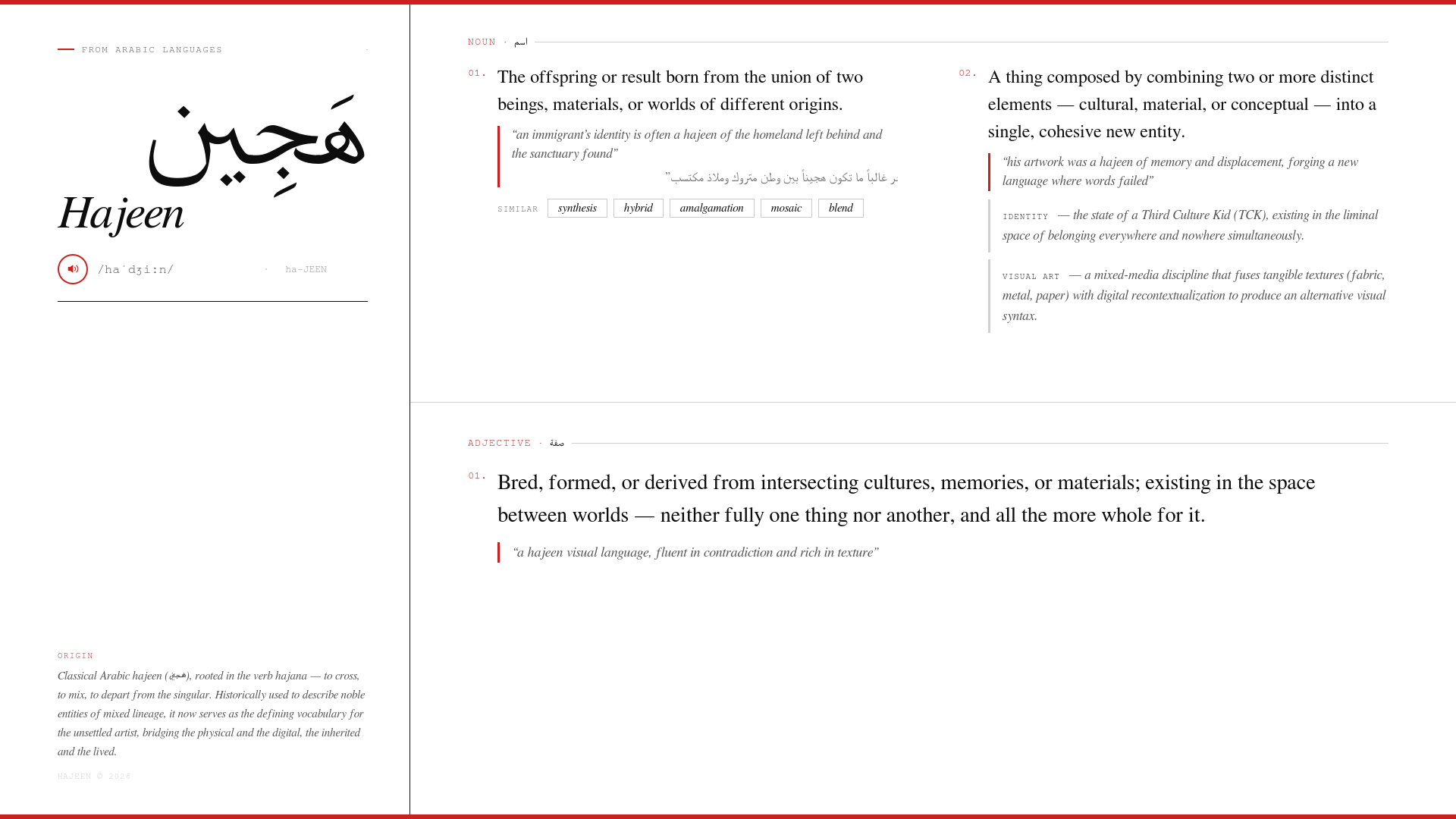
Recently, as my artistic tools evolved, I realized that spoken language was no longer sufficient to articulate this complexity. I needed an intermediate, hybrid visual language, one that expresses this intricate overlapping of worlds in a contemporary format. I wanted to build a sanctuary not just for myself, but for anyone around the world who shares this fragmented experience. This is how Hajeen was born.
Hajeen is not merely a series of artworks; it is an attempt to invent a visual alphabet for those who belong everywhere and nowhere all at once.
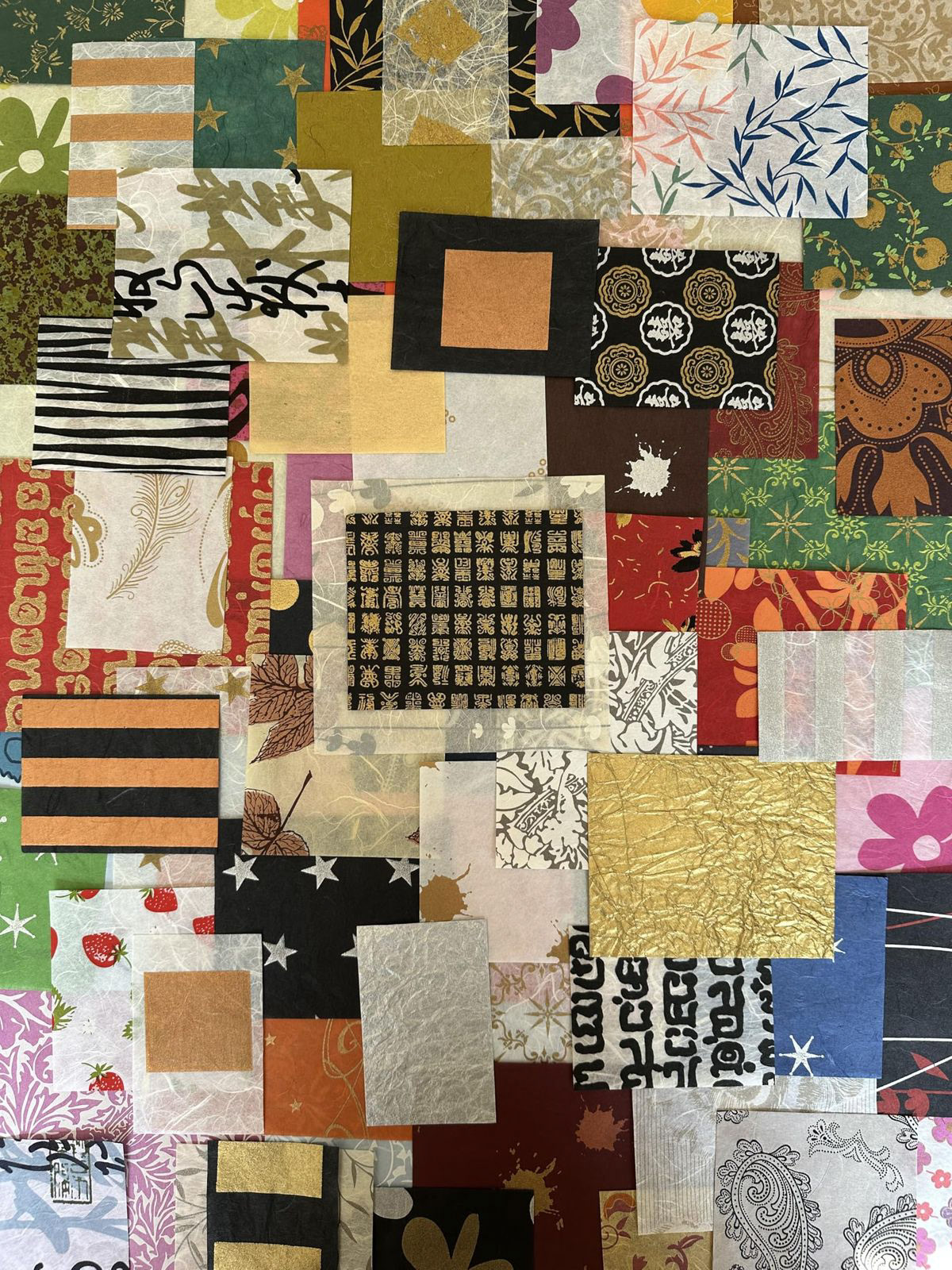
The Genesis
My journey as a visual artist began with collage, which forged an intimate, direct connection between me and tactile materials like paper and fabric. As a multidisciplinary artist, I found these physical textures to be an exceptional medium for expression. We all share collective memories attached to the feel of woven cloth, the coldness of metal, or the scent of leather. These materials carry a familiar nostalgia that gives me the freedom to build artworks that are both visually striking and philosophically profound.
The initial spark for this project came purely by chance during a period of creative block. I was searching for something new when I was captivated by the raw texture of Dammouria (the traditional cotton fabric used in the Sudanese Jalabiya). I decided to experiment by integrating this deeply familiar texture into a new composition.
However, the first fully realized piece of this collection was inspired by my fascination with Arabic and Persian rugs—specifically how their dense, intricately woven patterns serve as living archives for memories and occasions. I designed the artwork and paired it with an old Sudanese song titled Zahrat Roma (Flower of Rome), which romanticized a woman of exceptional beauty in old Khartoum. That piece became the definitive cornerstone of the Hajeen universe.
Cultural Symbols & Intersection
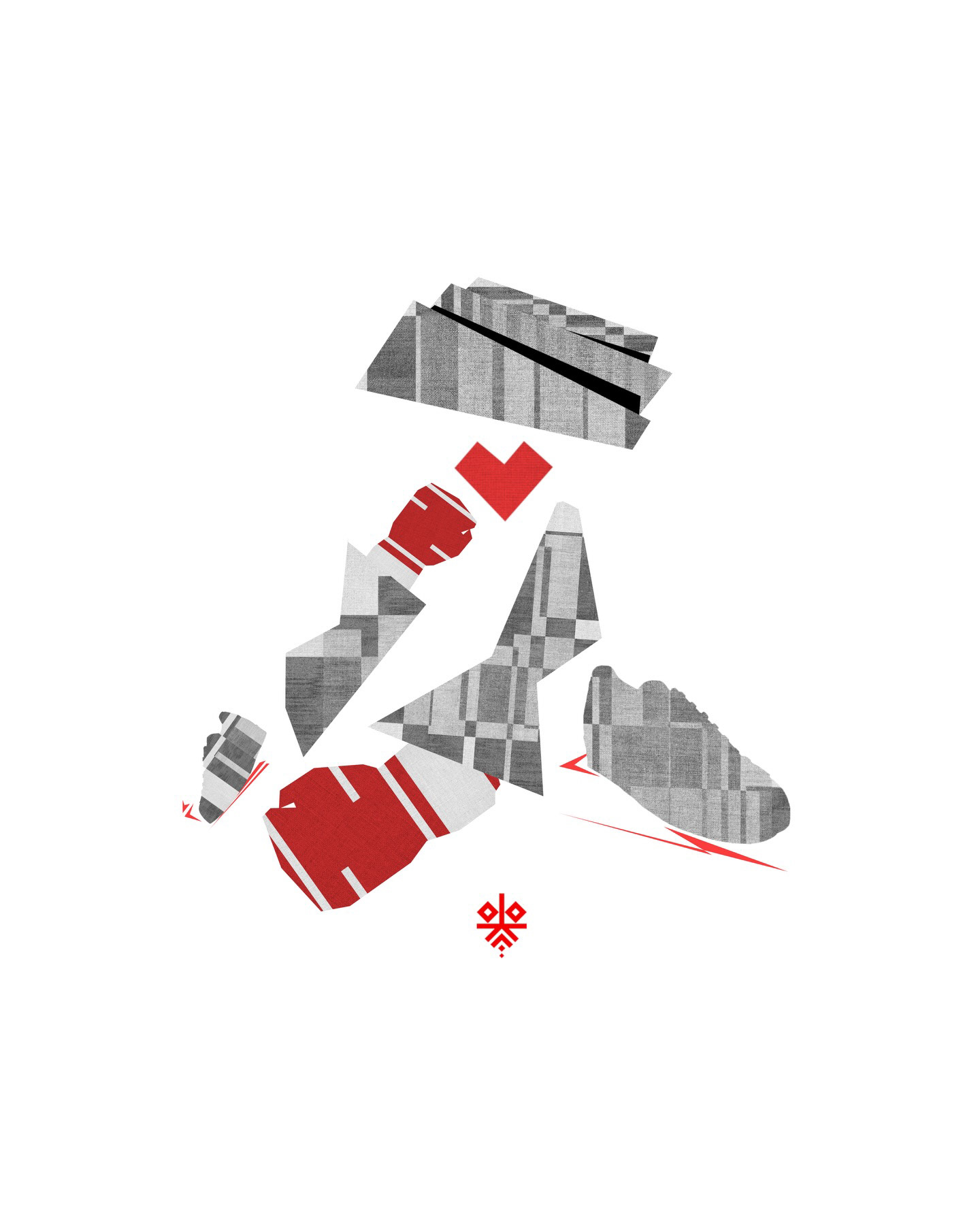
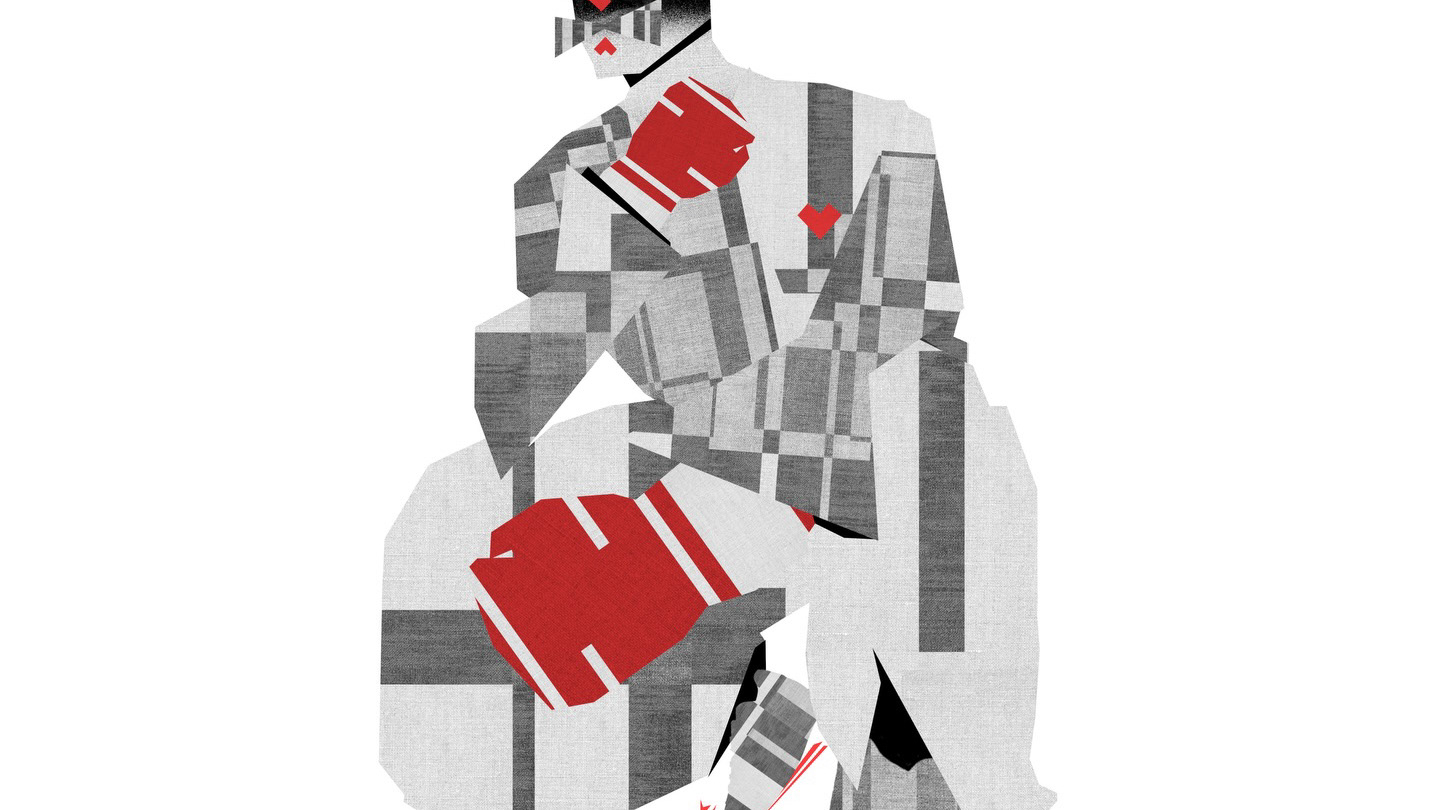
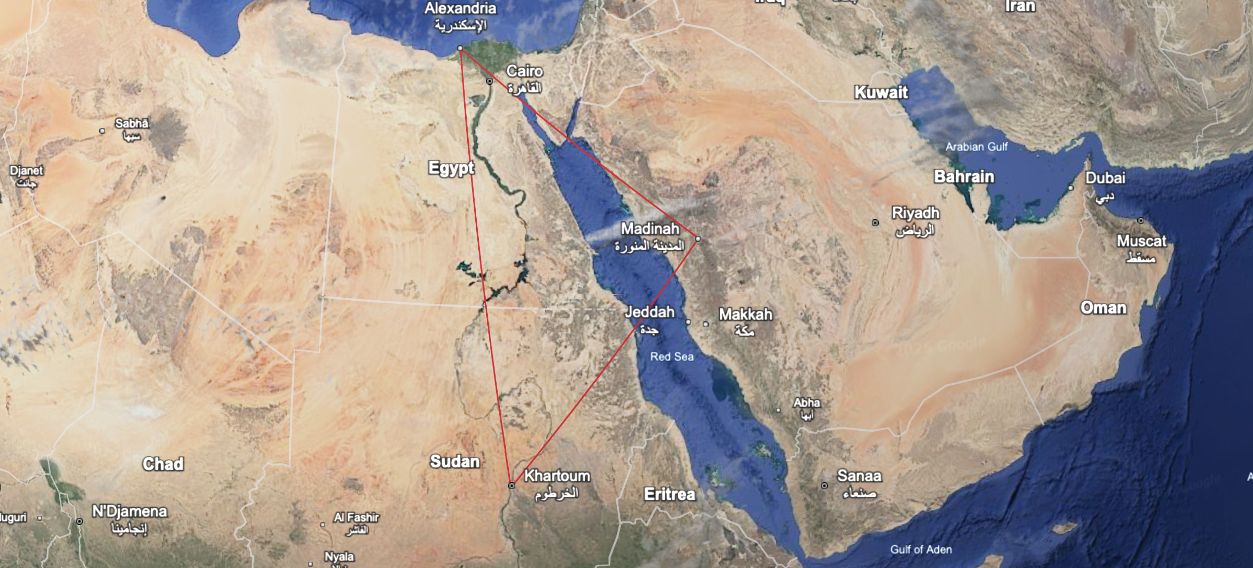
In the world of Hajeen, symbols recognize no borders. My intertwined life as a TCK—constantly digging into the past while dreaming of the future—drives me to envision hybrid scenes and visual paradoxes: A Sudanese artist living on the moon. An old man in the alleyways of Omdurman wearing Nike sneakers while playing an electric guitar. A man standing on the shores of Alexandria, wearing a traditional Jalabiya while practicing boxing.
This fusion of authentic heritage symbols with modern consumer icons, rendered through familiar organic textures, is my way of documenting this cultural entanglement. Hajeen is an artistic realm where all my contradictions can peacefully coexist. It is an invitation for every eye that gazes upon these works to find a piece of their own scattered memory, finally pieced back together.